OCD Therapy in NYC | ERP Specialist for Obsessive Compulsive Disorder
Robyn Stern, LCSW | Teletherapy in NY, CA, FL, CT, & NJ


What Does OCD Actually Feel Like? OCD Symptoms Beyond the Stereotypes
It's not about being neat or particular. For most people, OCD looks quieter — and far more exhausting — than that.
It looks like spending hours mentally retracing a conversation to make sure you didn't say something wrong. Googling your intrusive thoughts at 2am to figure out if they mean something. Asking the same question five different ways, hoping this time the answer will actually stick.
The checking, the reviewing, the reassurance-seeking — it works. For about ten minutes. Then the doubt comes back, usually louder.
If that sounds familiar, you're in the right place.
Why OCD Is So Hard to Overcome Without Specialized Treatment

OCD isn't a thinking problem. It's a cycle — and every attempt to get certainty feeds it.
That's why trying harder, reasoning your way out, or waiting for the thoughts to stop hasn't worked. Not because you're weak or broken, but because those strategies are exactly what OCD needs to survive.
The way out isn't finding the right answer. It's learning to respond differently when OCD demands one.
That's what therapy here is built around.
The Treatment: ERP — and Why It Works
Exposure and Response Prevention (ERP) is the gold-standard, most researched treatment for OCD. It works for every subtype — including the ones that live entirely in your head.
Here's the simple version of how it works:
OCD tells you something is dangerous, uncertain, or wrong, and your compulsion (checking, reassuring, avoiding, analyzing) gives you temporary relief — which teaches your brain the threat was real.
ERP interrupts that loop. Gradually, with support, you practice facing the uncertainty without responding to it. Over time, the alarm quiets — not because the thoughts disappear, but because they stop carrying the same charge.
It's not about white-knuckling through fear. It's about building evidence, one small step at a time, that you can handle this.
Most clients are surprised by how structured and manageable it feels once they start.

Types of OCD Treated in NYC — Including Pure-O, ROCD, and Harm OCD
OCD takes a different shape for everyone. Some of the most common presentations treated here:
Thought-Based:
Harm OCD · Sexual OCD · Scrupulosity · Existential OCD · Moral OCD · Real-Event OCD · False Memory OCD · Magical Thinking OCD · Meta OCD · Pure-O
Relationship & Identity:
Relationship OCD (ROCD) · Responsibility OCD · Self-Harm OCD · Postpartum OCD
Body & Behavior:
Contamination OCD · Checking OCD · Symmetry & "Just Right" OCD · Sensorimotor OCD · Health OCD
Not sure what to call what you're experiencing? That's okay — figuring it out is part of the work.
What OCD Therapy Sessions Look Like (From First Appointment to Real Progress)

The first thing we do is map your cycle. Not just "you have OCD," but the specific thoughts, compulsions, and avoidance patterns keeping you stuck. Understanding the shape of your cycle in detail takes away some of its power before formal treatment has even begun. Reassurance-seeking, mental reviewing, avoidance, rituals — I recognize these patterns quickly, and I'll name them with you without judgment.
Then we build your exposure hierarchy together. This isn't a list of scary things you have to do. It's a gradual, collaborative plan that starts where you are and moves at a pace that challenges you without overwhelming you. Each step is calibrated to what feels manageable now, with the harder work building from there.
You'll always know what we're doing and why. ERP asks something real of you. You'll never be pushed into something without understanding the purpose. The work is hard sometimes, and it's also the most effective path through.
Progress feels different from what you might expect. It's not that the thoughts stop. It's that they start to matter less. You stop organizing your day around avoiding them. You notice you did something OCD said you couldn't, and you were fine.
Why Work With a Specialist Like Robyn Stern, LCSW
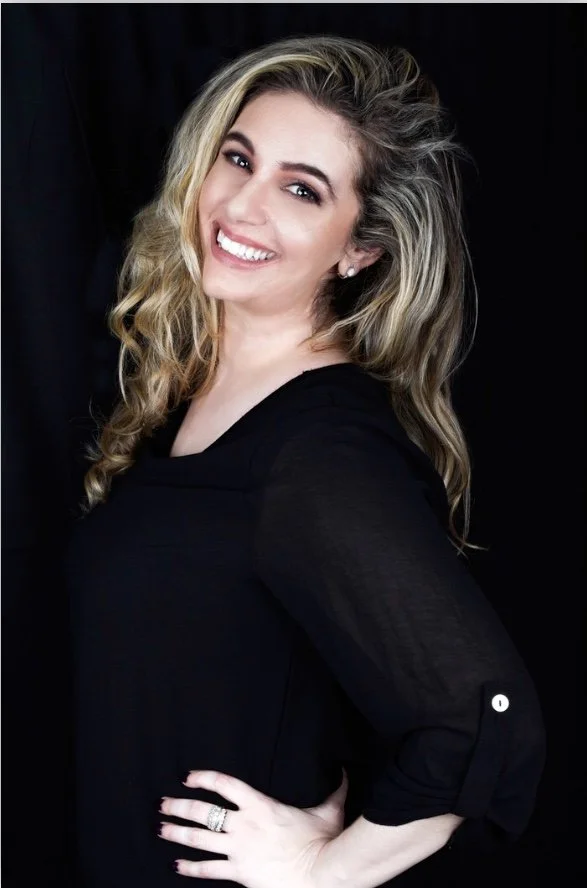
OCD responds best to treatment from someone who knows it specifically — not just anxiety in general.
I've spent over a decade specializing in OCD and anxiety disorders. I'm trained in ERP, CBT, and ACT, and I stay current with research through ongoing IOCDF trainings.
I also have my own lived experience with anxiety and recovery. That's not a detail I share for sympathy. It's what makes me genuinely understand what it costs to live inside these cycles, and what it takes to get out of them.
The combination of clinical training and personal experience shapes everything about how I work: structured enough to actually move the needle, human enough that you feel safe trying.
Getting Started With OCD Therapy in NYC
STEP 01
A 15-Minute Conversation
No intake forms, no commitment. You describe what's been happening in whatever words you have for it. I tell you honestly whether what you're dealing with is something I treat, what the work involves, and what's realistic to expect.
STEP 02
Mapping the Specific Shape of Your OCD
The first sessions are about getting clear on what's actually running: which thoughts trigger which compulsions, where the avoidance lives, what rules you've built around it, what OCD has quietly taken over. Without this mapping, treatment misses.
STEP 03
Changing Responses, Not Thoughts
ERP works by changing what you do when the thoughts show up, not by making the thoughts stop. Over time, the loop has less to hold onto. The change shows up in your week, not just in how you talk about your week.
Common Questions About OCD Therapy
-
No. You can say "I have thoughts that scare me" and that's enough to start. As treatment progresses we get specific, because ERP requires it, but the pace is yours. The content of intrusive thoughts is one of the most predictable parts of OCD. Whatever you describe, I've heard before, and the specifics don't change how I respond to you.
-
Yes. The thoughts that feel most impossible to say are almost always the thoughts I hear most often in this work. Harm-related, sexual, religious, thoughts about people you love — these are the classic OCD intrusive thought categories, and the fact that they horrify you is the OCD signature, not evidence of who you are. You can describe them in the language you have, or not describe them at all until you're ready. Both are workable.
-
Yes. Pure-O is one of the most common presentations I treat. The compulsions in Pure-O are mental rather than visible — mental review, reassurance-seeking, neutralizing, figuring it out — but the underlying cycle is the same as any other OCD subtype, and ERP-based treatment principles apply. Many people with Pure-O have been told they have "just anxiety" by previous therapists, and the treatment didn't help because it wasn't built for OCD specifically.
-
Getting a diagnosis doesn't make OCD more real. It gives you a framework and a treatment path. Many of my clients come in without a formal diagnosis and never pursue one outside of our work; others find that having language for what's happening actually reduces the fear around it. There's no requirement either way. What we work on is the cycle itself, whether or not there's a diagnostic label attached.
-
This is common. The most frequent reason previous therapy didn't move OCD is that it wasn't ERP, or wasn't ERP done correctly. Talk therapy that relies on reassurance, insight, or open-ended processing tends to feed the cycle rather than break it. The therapist may have been skilled. The approach was wrong for what you have. Specialized ERP is structured differently by design.
-
All of them. Pure-O, Harm OCD, Sexual OCD, Relationship OCD (ROCD), Scrupulosity, Contamination OCD, Checking OCD, Existential OCD, Real-Event OCD, False Memory OCD, Magical Thinking OCD, Postpartum OCD, Sensorimotor OCD, Health OCD, Symmetry & "Just Right" OCD, Meta OCD, and others. Treatment principles are the same across subtypes; the specifics of how we apply ERP vary by what you're actually dealing with.
-
Yes. SSRIs are frequently prescribed alongside ERP for OCD, and the combination is well-supported by research. I work alongside your prescribing psychiatrist and coordinate care when helpful. If you're not currently on medication and want to consider it, I can refer you to psychiatrists who understand OCD specifically.
-
Most clients begin noticing meaningful change within two to three months of consistent ERP work. A full course of treatment runs six to twelve months for most clients, depending on severity, subtypes present, and complexity. OCD is a highly treatable condition, and sustained recovery is the expected outcome of good specialty treatment.
See all questions about costs, insurance, session length, teletherapy, and Robyn's approach on the full FAQ page

OCD Is Treatable. The Loop Isn't the End of the Story.
If you've spent years trying to think your way out, find the right answer, or push through with pure effort — and it keeps coming back — that's not a failure of willpower. That's OCD doing what OCD does. And it's exactly what specialized ERP is built to interrupt.
The version of your week that isn't organized around checking, avoiding, or reasoning with the loop is still available. It just takes the right treatment to get back to it.