OCD Therapy in New York | ERP Specialist | Robyn Stern, LCSW
Serving NYC, Westchester, Long Island & All of New York State via Teletherapy


You've Been Trying to Think Your Way Out. It's Not Working.
Maybe you've Googled your thoughts at 2am trying to figure out if they mean something. Maybe you've asked the same question to the same person five times this week, and the relief lasted about an hour. Maybe you've stopped doing things you used to love because it's easier than managing what happens in your head when you try.
You know something is wrong. You might even know it's OCD. What you haven't found yet is someone who actually understands it. Not just anxiety in general, but the specific, exhausting loop of intrusive thought, compulsion, temporary relief, and doubt that comes back louder.
That's what this work is built around.
Finding the Right OCD Specialist in New York Is Harder Than It Should Be

New York has more therapists than almost any other state. That doesn't make finding the right one easier. It usually makes it harder.
Most therapists in New York list OCD as one of fifteen or twenty things they treat. That's not the same as specializing in it. And for OCD, the difference matters more than it does for almost any other condition. Without ERP-specific training, well-meaning therapy can quietly reinforce the loop you're trying to break: too much reassurance, too much open-ended processing, too much focus on understanding the thoughts instead of changing your response to them.
The therapists who do specialize in OCD in New York are often at capacity, have months-long waitlists, or only offer in-person sessions at hours that don't work for a working week.
If you've tried therapy before and it didn't stick, that's probably why.


Why Teletherapy Works for OCD — Even When You Could Go In Person
Seeing a specialist remotely isn't a compromise. For OCD in particular, it has real advantages over an office.
ERP happens in your life, not in an office. Working from your own home means exposures can happen in the environments where OCD actually shows up: the bathroom, the kitchen, the bedroom, the email inbox. The work is more immediate, more relevant, and often more effective because of it.
Teletherapy also takes a barrier off the table that OCD itself can create. For many clients, getting to an appointment becomes its own source of avoidance, anxiety, or ritual. Removing the commute, the waiting room, the navigation of public space, makes the work easier to actually do, week after week.
And teletherapy expands access for New Yorkers outside Manhattan. Westchester, Long Island, the Hudson Valley, Buffalo, Rochester, Albany, Syracuse, and everywhere in between often have no local OCD specialist at all. Driving two hours each way for a 50-minute session isn't sustainable. Teletherapy is.
Robyn Stern, LCSW is based in New York City and fully licensed to practice across New York State. Sessions are conducted via secure video. Same clinical depth, same ERP structure, same specialized care. Wherever you are in New York, help is available.
The Treatment: Exposure and Response Prevention (ERP)
Supporting approaches: CBT, ACT, and mindfulness are woven in where they fit. ERP is always the foundation.
OCD runs on a loop: a triggering thought, a compulsion that brings relief, and doubt that floods back stronger than before. Every ritual you perform teaches your brain the threat was real, which is why the cycle keeps tightening, no matter how hard you try to think your way out.
ERP interrupts that loop. Gradually and with full support, you practice facing the uncertainty OCD creates without performing the compulsion. Over time your brain learns what it couldn't learn any other way: that the discomfort is temporary, survivable, and not actually dangerous.
It's not about forcing yourself through fear. It's about building evidence, one small step at a time, that you can handle this.
OCD Subtypes Treated
OCD takes a different shape for everyone. All presentations are treated, including:
Thought-Based:
Harm OCD · Sexual OCD · Scrupulosity · Existential OCD · Moral OCD · Real-Event OCD · False Memory OCD · Magical Thinking OCD · Meta OCD · Pure-O
Relationship & Identity:
Relationship OCD (ROCD) · Responsibility OCD · Self-Harm OCD · Postpartum OCD
Body & Behavior:
Contamination OCD · Checking OCD · Symmetry & "Just Right" OCD · Sensorimotor OCD · Health OCD
Not sure what to call what you're experiencing? That's okay. Naming it is part of the first session.

We start by mapping your specific cycle. Not a generic OCD overview. Your intrusive thoughts, your compulsions, your avoidance patterns. Understanding your cycle in detail takes away some of its power before formal treatment has even begun.
Then we build your exposure hierarchy together. Gradual, collaborative, paced to challenge you without overwhelming you. You'll always know what we're doing and why.
Progress feels different from what you might expect. It's not that the thoughts disappear. It's that they start to matter less. You stop organizing your day around them. You notice you did something OCD said you couldn't, and you were fine.
What Working Together Looks Like
Why Work With a Specialist Like Robyn Stern, LCSW, Not a Generalist
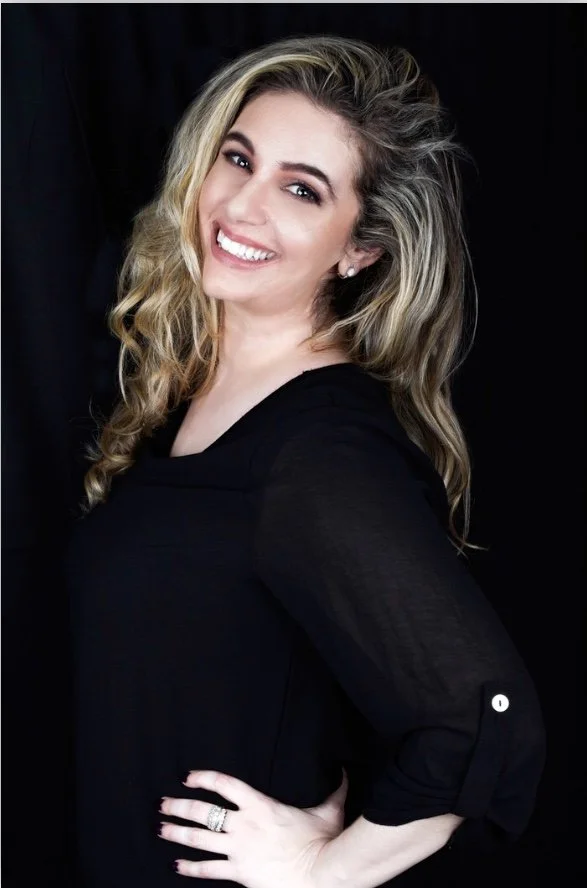
OCD is one of the most misdiagnosed and mistreated conditions in mental health. A therapist without specific OCD training, however skilled and well-meaning, can inadvertently reinforce the cycle rather than break it.
Specialized OCD treatment means knowing how to conduct ERP without triggering unnecessary distress. It means recognizing mental compulsions that look like insight. It means not offering reassurance even when it would feel kind to do so.
I bring over a decade of specialized experience in OCD and anxiety disorders, advanced training in ERP, CBT, and ACT, and my own lived recovery from anxiety. That combination, clinical rigor and genuine personal understanding, shapes every session.
Now accepting clients throughout New York State.
Getting Started With Body Image Therapy in NYC
STEP 01
Free 15-min Call
No forms, no pressure. Just a real conversation about what's been going on and whether working together is a good fit.
STEP 02
Plan Around Your OCD
A personalized treatment plan based on your specific patterns, not a template.
STEP 03
A Different Kind of Relief
The kind that doesn't wear off in ten minutes. That's what ERP makes possible.
Common Questions About OCD Therapy in New York
-
Yes. Multiple studies have shown that ERP delivered via teletherapy produces outcomes equivalent to in-person treatment. For many OCD subtypes, doing exposures in your real home environment, your bathroom, kitchen, inbox, or wherever the OCD actually shows up, makes the work more relevant and often more effective than doing them in an office. The clinical depth is identical. The setting changes.
-
Yes. Pure-O is one of the most common presentations I treat. The compulsions in Pure-O are mental rather than visible. Mental review, reassurance-seeking, mental checking, thought neutralizing, figuring it out, but the underlying cycle is the same as any other OCD subtype, and the same ERP-based treatment principles apply. Many people with Pure-O have been told they have "just anxiety" by previous therapists, and the treatment didn't help because it wasn't built for OCD specifically.
-
I treat clients across all of New York State via secure teletherapy. NYC (Manhattan, Brooklyn, Queens, the Bronx, Staten Island), Long Island, Westchester, the Hudson Valley, Albany, Buffalo, Rochester, Syracuse, and everywhere in between. If you're licensed in New York, you can work with me, regardless of which part of the state you're in.
-
This is one of the most common things new clients tell me, and it usually isn't because OCD is untreatable. It's because the previous therapy wasn't ERP, or it was ERP done without specific OCD training. Non-specialist therapy often stalls or worsens OCD by relying on reassurance, insight, or open-ended processing, all of which feed the cycle rather than break it. Specialized ERP is structured differently by design, and most clients who haven't responded to general anxiety treatment respond well to specialized OCD treatment.
-
Yes, and for many clients, combining ERP with an SSRI is the most effective approach. I work alongside your prescribing psychiatrist and coordinate care when helpful. If you're not currently on medication and want to consider it, I can refer you to OCD-knowledgeable psychiatrists in New York.
-
The first session is focused on getting clear on what's actually happening. We map your specific obsessions, the compulsions you do in response, what you avoid, and what the cycle has been costing you. You don't need to come in with a list or have your symptoms organized. Just describing what's been going on is enough. The first session is also where we decide together whether we're a good fit to work together.
-
Most clients begin noticing meaningful change within two to three months of consistent ERP work. Full course of treatment for most clients runs six to twelve months, depending on severity, complexity, and how many subtypes are present. OCD is a treatable condition, and sustained recovery is the expected outcome of good treatment.=
See all questions about costs, insurance, session length, teletherapy, and Robyn's approach on the full FAQ page

Also Treating New York Clients For:
If you're also navigating Body Dysmorphic Disorder (BDD), a Body-Focused Repetitive Behavior (BFRB), an anxiety disorder, body image distress, or self-esteem patterns, I offer specialized treatment for each.

OCD Is Treatable. The Right Support Is Available, Wherever You Are in New York.
Living in New York shouldn't mean settling for a generalist when what you need is a specialist. Teletherapy makes it possible to access focused, evidence-based OCD treatment from wherever you are in the state.
You don't have to keep managing this alone.