OCD Therapy in California | ERP Specialist | Robyn Stern, LCSW
Serving Los Angeles, San Francisco, San Diego & All of California via Teletherapy


California Has No Shortage of Therapists. OCD Specialists Are a Different Search.
If you live in Los Angeles, San Francisco, or San Diego, you have access to more therapists than almost anywhere in the country. Wellness is woven into the culture. Mental health literacy is high. And yet if you have OCD — real OCD, not the kind people joke about — finding someone who actually knows how to treat it is still surprisingly hard.
Most therapists list OCD among a long menu of conditions they work with. That is not the same as specializing in it. And for OCD, that difference is not minor. Reassurance-based approaches, open-ended talk therapy, and even well-intentioned support can quietly reinforce the cycle you are trying to break. If you have already tried therapy in California and it did not hold, that is likely why.
ERP — Exposure and Response Prevention — is the gold-standard treatment for OCD. It requires a therapist who knows it specifically: how to structure it, how to pace it, how to recognize the mental compulsions that look like insight, and how to avoid offering reassurance even when it would feel kind to do so. That is what this practice is built around.
The OCD Cycle Looks Different in High-Achieving Environments

California attracts people who are driven, self-aware, and used to solving problems through effort and intelligence. OCD exploits both of those things.
You have probably already researched your condition extensively. You may have identified your OCD subtype, read about ERP, and understand cognitively why reassurance-seeking makes it worse. That knowledge does not make the cycle stop. In fact, for many high-functioning people, the research itself becomes the compulsion — another way of trying to think your way to certainty.
The intrusive thought comes. You analyze it, contextualize it, Google it, or ask someone you trust. The relief lasts an hour. Then it comes back louder, and the next round of analysis begins.
Living in a city that prizes self-optimization does not help. There is always another framework, another modality, another therapist who approaches it a little differently. OCD will use every one of them to keep you searching instead of recovering.
ERP stops that search — not by finding the right answer, but by changing your relationship to the uncertainty itself.


Body Dysmorphic Disorder — A Second Specialty, Rarely Available in One Practice
BDD is one of the most misunderstood and underdiagnosed conditions in mental health — and in a culture as appearance-focused as Los Angeles, it is also one of the most common. The problem is that it rarely gets named correctly.
BDD is not vanity or insecurity. It is intrusive doubt that locks onto appearance and will not settle — no matter how many times you check, compare, seek reassurance, or avoid. The relief is temporary. The doubt always returns. And the cycle, untreated, tends to tighten over time.
The same cognitive and behavioral mechanisms that drive OCD drive BDD, which is why true specialization in one tends to produce genuine expertise in the other. Both conditions are treated here using structured, evidence-based approaches — not general talk therapy repackaged as BDD treatment.
If you have been told you have anxiety, depression, or low self-esteem and nothing has stuck, BDD may be worth exploring.

Why Teletherapy Works — Particularly Well for OCD and BDD
Working with a specialist remotely is not a compromise. For OCD and BDD it has specific advantages that in-person therapy does not.
ERP happens in your actual life, not in an office. Exposures can take place in the environments where OCD actually shows up — the bathroom, the car, the kitchen, the moments between meetings. For BDD, working from home means accessing mirrors, routines, and real-life triggers in real time. The work is more immediate and more transferable because of it.
It also removes a barrier that OCD itself creates. Getting to an appointment can become its own source of ritual, avoidance, or anxiety. Teletherapy takes that off the table entirely.
Robyn Stern, LCSW is based in New York and fully licensed to practice in California. Sessions are conducted via secure video — same clinical depth, same ERP structure, same level of specialized care. Wherever you are in California, access to a genuine OCD and BDD specialist is no longer a geography problem.
The Treatment: Exposure and Response Prevention (ERP)
CBT, ACT, and mindfulness are woven in where they fit. ERP is always the foundation.
OCD and BDD run on the same loop: a triggering thought, a compulsion that brings temporary relief, and doubt that returns stronger than before. Every ritual — whether behavioral or mental — teaches your brain the threat was real. That is why the cycle tightens over time regardless of how hard you work to stop it.
ERP interrupts that loop. Gradually, with full support, you practice sitting with the uncertainty without performing the compulsion. Over time, your brain learns what it could not learn any other way: that the discomfort is temporary, survivable, and not actually dangerous.
It is not about forcing yourself through fear. It is about building evidence, one step at a time, that you can handle this.
OCD Subtypes Treated Throughout California
OCD takes a different shape for everyone. All presentations are treated, including:
Thought-Based:
Harm OCD · Sexual OCD · Scrupulosity · Existential OCD · Moral OCD · Real-Event OCD · False Memory OCD · Magical Thinking OCD · Meta OCD · Pure-O
Relationship & Identity:
Relationship OCD (ROCD) · Responsibility OCD · Self-Harm OCD · Postpartum OCD
Body & Behavior:
Contamination OCD · Checking OCD · Symmetry & "Just Right" OCD · Sensorimotor OCD · Health OCD
Not sure what to call what you're experiencing? That's okay. Naming it is part of the first session.
Also Treating California Clients For:
Body-Focused Repetitive Behaviors (BFRBs) including skin picking and hair pulling share significant overlap with OCD and are treated using the same structured, evidence-based approach.
What Working Together Looks Like. Meet Robyn Stern, LCSW
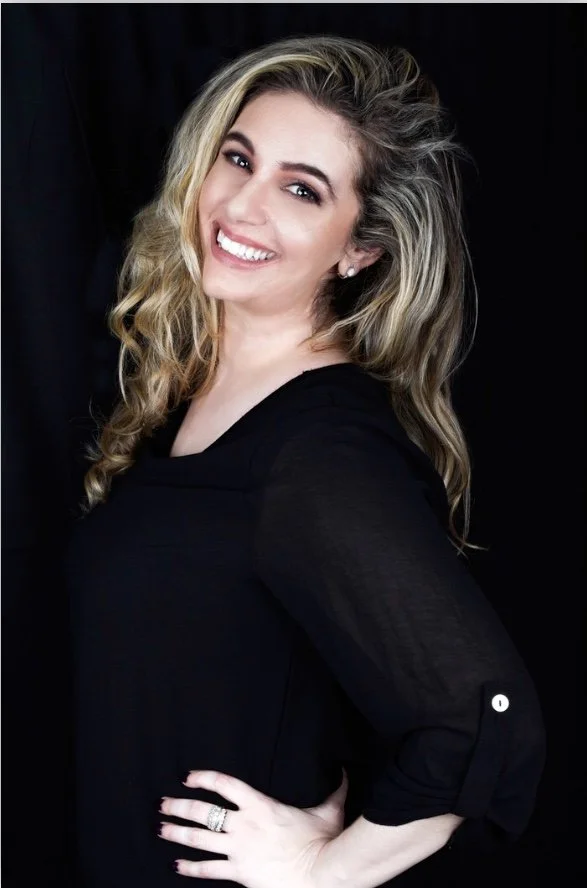
We start by mapping your specific cycle — not a generic OCD or BDD overview, but your intrusive thoughts, your compulsions, your avoidance patterns. Understanding your cycle in detail takes away some of its power before formal treatment has even begun.
Then we build your exposure hierarchy together. Gradual, collaborative, paced to challenge you without overwhelming you. You will always know what we are doing and why.
Progress looks different from what you might expect. It is not that the thoughts disappear. It is that they start to matter less. You stop organizing your day around them. You notice you did something OCD said you could not — and you were fine.
Common Questions About OCD and BDD Therapy in California
-
No. Sessions are conducted via secure teletherapy and are available to anyone located in California, regardless of city.
-
For OCD and BDD specifically, research supports teletherapy as equally effective — and in some cases more so, because exposures happen in the real environments where these conditions actually show up.
-
If previous therapy did not include structured ERP with a specialist, it may have inadvertently reinforced the cycle rather than interrupting it. That is not a reflection of your effort — it is a treatment fit issue.
-
Body image concerns exist on a spectrum. BDD is characterized by intrusive, repetitive doubt about appearance that is difficult to control, triggers compulsive checking or avoidance, and causes significant distress or interference in daily life. If the thoughts feel urgent, consuming, and resistant to reassurance, BDD is worth exploring.
-
It varies depending on severity and presentation, but most clients begin to notice meaningful shifts within the first several months of consistent ERP work.
-
Collaborative, honest, and straightforward. We're here to guide the process, bring ideas to the table, and keep things moving.
See all questions about costs, insurance, session length, teletherapy, and Robyn's approach on the full FAQ page


You Do Not Have to Keep Searching for the Right Fit
In a state with this many therapists, it can feel like the right one should be easy to find. For OCD and BDD, the search tends to go longer than it should — not because good therapists are not available, but because genuine specialization in both conditions is still rare even here.
If you have been doing the research, you already know what you are looking for. This is it.